
If you have never driven in Africa, and you drop down from the Western world…
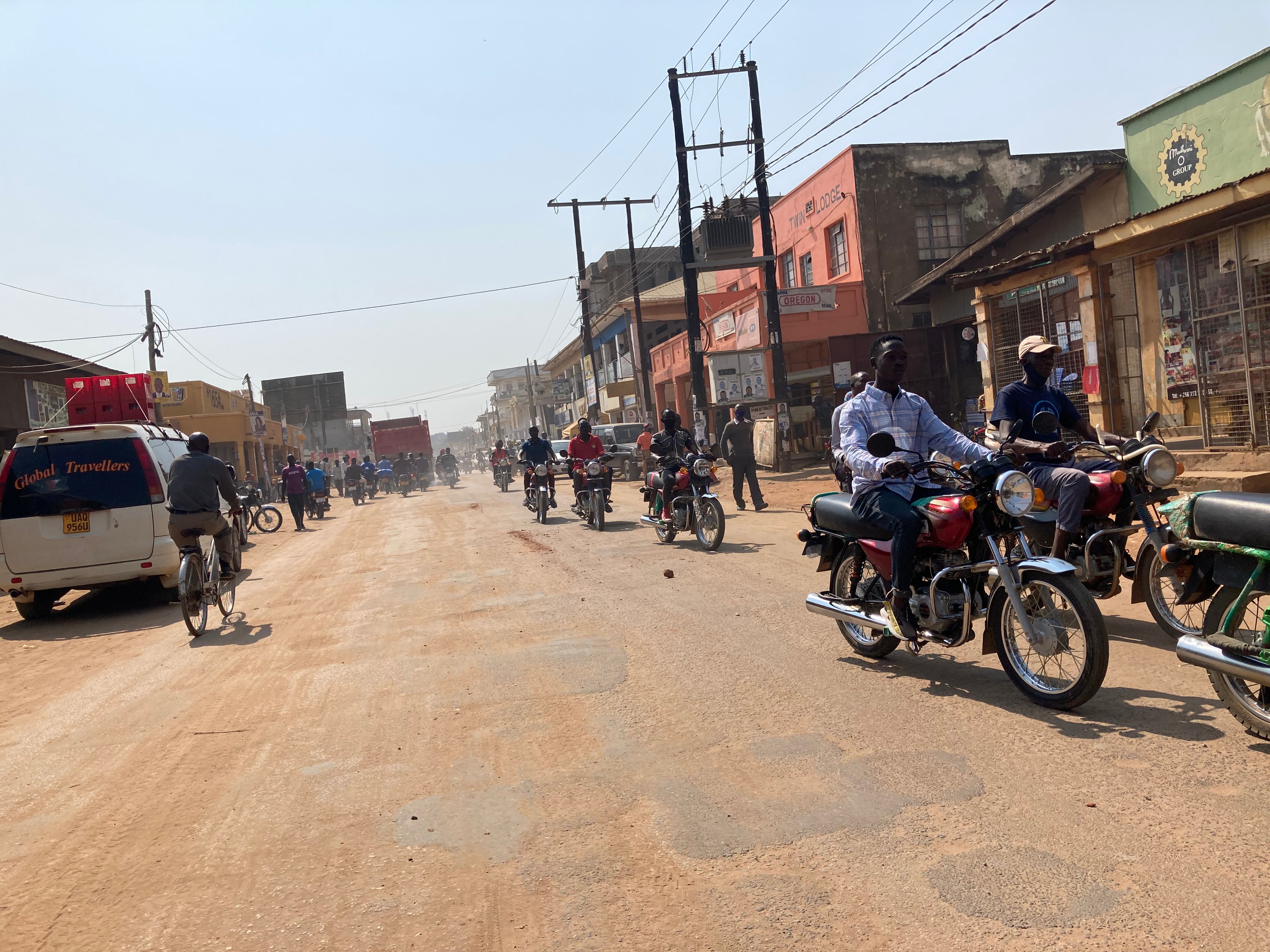
Say you start off in Kampala and drive north to Arua (where we call home base in the West Nile Region, a roughly 10 hour trip) thinking you are on a state-maintained road, you will likely not make it to Arua. Your vehicle will bite the dust, and you will need to find alternative means or perhaps a place to spend the evening. The potholes are like craters on the moon. Your journey will end before you intended, your vehicle with fewer axles or tires than you started with.
If you manage to miss all the potential for vehicle troubles, yet you depend on Google Maps to help you reach the destination, you will find yourself visiting a village you did not have in mind. The traffic police and military checkpoints will catch you off guard, and may even frighten you. Taking pictures at the wrong place could be cause for your arrest. Eating the wrong foods at the wrong times could provide some misery. You would experience a difficult day!
If you take a taxi van, bus, or truck—according to your budget—you will quickly notice who has traveled these roads often. Looking out your window, and perhaps courtesy of your own driver, you will see who: knows the paths of least resistance, has memorized the major pitfalls, has studied how not to go off the most recent washed-out ditch.
You will watch that some folks know how to avoid or reduce the need for 4 wheel drive, understand how to keep their windshield, have a grasp on how and when to pass—or where to stop—while others do not. You will realize that those who know the roads well also know there is a time when ‘beside the road’ is better than remaining on the scattered bits of tarmac, and so on. They know how to handle the stops, when to keep moving, all of it.
Another observation will be that there’s a difference between shepherds with ownership and hired hands, as the Bible discusses. Or, plainly, you will see who owns the vehicle they are moving in by the way they care for it, while others will just be taking tea and eating a chapati while sitting on the overturned vehicle beneath them as if to say, “no matter, not my problem,” after hours of ramming speed bumps at the town limits and every broken road, “full-on” while overloaded.
You will see who drives the 30 years old vehicle as if it were a tank and parts and maintenance were free, as if their vehicle would never have any other future mission, while others exhibit caution, knowing this is the same vehicle that will need to get them from point B back to point A, eventually. They have a sense of stewardship that impacts their desire for speed.
I hope what I am saying makes sense. Our visitors and interns could certainly testify to this example. Driving etiquette and road maintenance (or lack thereof), road blocks and traffic stops, and fast foods are some of the smaller peripheral things which differ across cultural lines. If matters such as these need attention on the front end, with perpetuity, how much more the foreign missionary’s understanding of cultural norms, value systems, religious practices, tribal struggles, dining manners, time management, language, how people show honor, how young people learn, and beyond?
Are you getting what I am saying with the long, rough road analogy? We are not here simply to make haste. We are not simply seeking to arrive at a destination; it matters how we navigate and interact along the way.
It matters that we steward well what has been entrusted to us, that the gospel is truly presented in a manner that can be understood. It matters that we take time to be among and understand the people we have come to serve, that Christ Jesus would receive the glory of which he alone is worthy. This matters significantly more than what it looks like from a distance, to those who may be supporting the work.
For missions to move well, there has to be mindful involvement on the front end and for a long season working through the basics, much learning while also investing, an eagerness to endure and understand, the ongoing decision to have a glad heart through all circumstances—come what may—for the cause of Christ and gospel advance.
Christ came incarnate, and we ought to do the same. Remaining at a distance will inherently be at odds with embodied mission work. Short visits can serve as encouragement, and prayer matters more than we realize, yet they are not the same as shared life day in and day out.
God grant us wisdom for the present and for the long-haul, as local churches in the West desiring to see your Kingdom come. There is nothing greater that we can give than our time, our very lives.
So, being affectionately desirous of you, we were ready to share with you not only the gospel of God but also our own selves, because you had become very dear to us. —1 Thessalonians 2:8 ESV


Man I love this so much! So good!!
W. Van Jones 205-728-3132